

You’ve decided to downsize. Now what?
Deciding to leave a home you’ve lived in for decades isn’t always easy. It’s where you’ve raised families, celebrated milestones, weathered difficult times, and built a lifetime of memories.
But sometimes, the home that served you so well for all those years no longer fits the life you want to live today.
Maybe the stairs have become exhausting. Maybe you’re tired of mowing, shoveling snow, or maintaining rooms you rarely use. Or perhaps you’re simply looking ahead and want a home that will better support you as you age.
Choosing to downsize doesn’t mean giving up your independence. It can be a way to protect it.
And here’s the important part: You don’t have to sell your home tomorrow.
Phase Two is about getting things in order so that when the time comes, you’re prepared, confident, and still in control.
You get to decide what stays, what goes, where you’ll live, and what this next chapter looks like.
There’s no deadline. There’s no expectation that you have to get rid of everything. And there’s certainly no reason to feel guilty about wanting a simpler life.
According to Age Wave, at least 64% of people age 55+ expect to move at least once in retirement. Common reasons include home maintenance, safety concerns, finances, and the desire for an easier day-to-day life.
For many, the goal is to make the move on their own terms, rather than waiting until a health crisis or unexpected event forces the decision.
Preparing is empowering. Let’s get started.
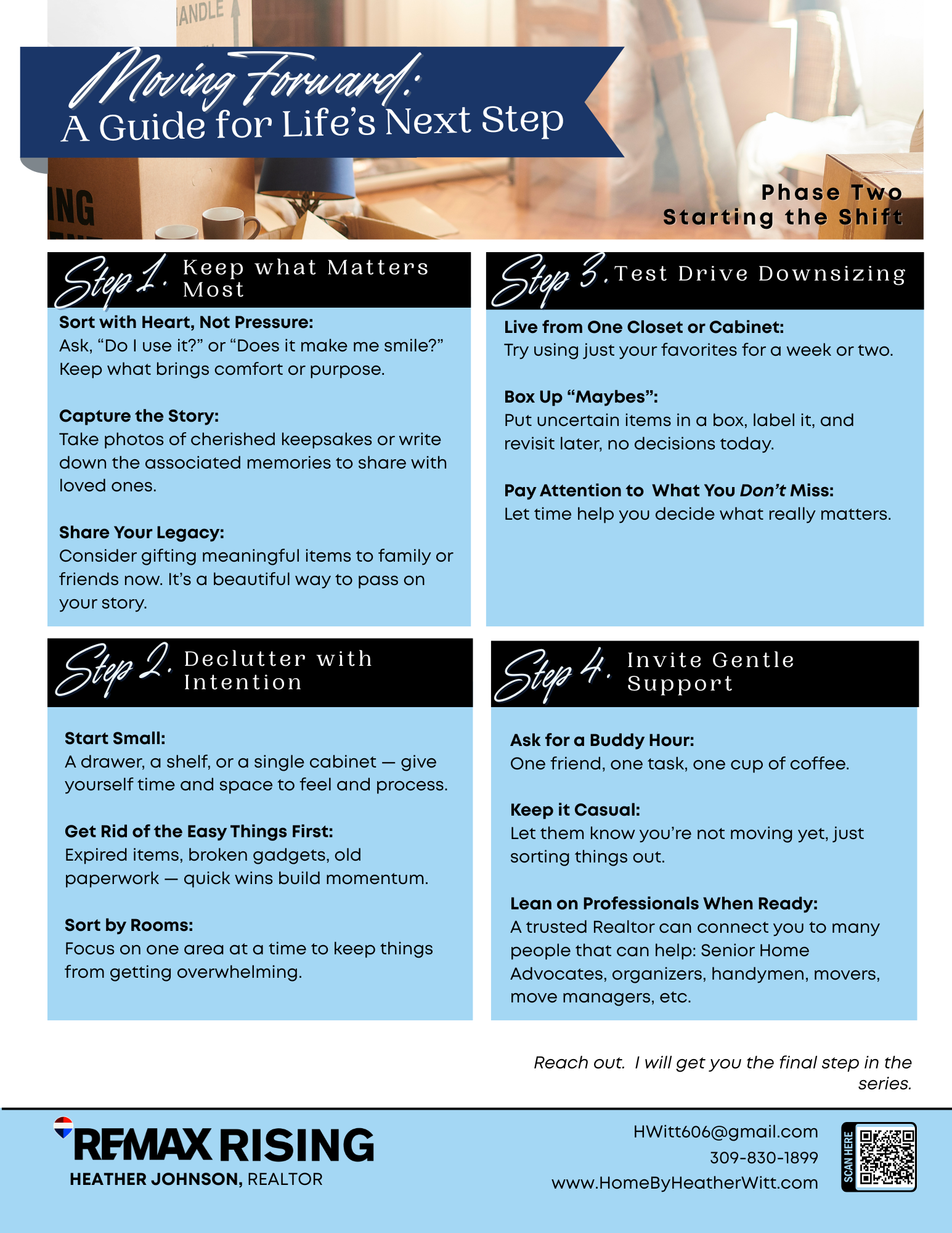
Step 1: Keep what matters most.
Downsizing isn’t about getting rid of everything. It’s about deciding what deserves a place in your next chapter.
Instead of asking, “Should I get rid of this?”, ask yourself:
- Do I use this?
- Does this make me happy, or comfort me?
Share Your Legacy
Your belongings hold memories, but those memories may not hold the same meaning for your children or grandchildren.
You have lovingly saved something for years, believing a loved one would want it someday. But have you asked them?
Now is the perfect time to have those conversations. Ask what they’d like to keep, share the stories behind meaningful items, and consider passing some of those treasures along while you’re still here to enjoy their appreciation.
And remember, your children may feel guilty letting go of your belongings someday, especially if they don’t have the space or need for them.
Giving them permission to let go of the things they don’t want or need can be a gift in itself.
The memories and stories are your legacy. Your loved ones don’t have to keep every physical item to honor them.
Capture the Story
Sometimes, it’s not the object itself that matters most. It’s the memory attached to it.
Maybe it’s the dining room table where your family gathered for decades, a collection you built with your spouse, or a piece of furniture that belonged to your grandparents.
Before deciding what to keep or pass along, take time to preserve those stories.
Take photographs of meaningful items. Write down where they came from, who they belonged to, and why they’re special. Better yet, invite your children or grandchildren to sit down with you and share those memories. I’ve learned the value of recording these conversations; give it a try. In years to come, your family will cherish them.
These stories can become a wonderful keepsake of their own, something your family can enjoy and pass along for generations.
And remember, preserving the memory doesn’t always mean keeping the object. Sometimes a photograph, a handwritten story, or a shared conversation allows you to hold on to what matters most while making room for what’s next.
Step 2: Declutter With Intention
Start embarrassingly small.
Seriously: one drawer, one shelf, one cabinet.
You don’t need to clean out the entire basement this weekend. Start with something manageable, give yourself permission to stop, and celebrate the progress you’ve made.
Begin with the easy things:
- Trash and recycling: Expired products, broken items, outdated magazines, and unusable household items.
- Extras: Duplicate utensils, extra baskets, excess linens, and things you have more of than you need.
- Things you no longer use: Clothes, shoes, purses, books, and other items that no longer serve a purpose.
- Paperwork: Sort through old documents, but verify retention requirements before shredding financial, legal, or medical records.
Starting with easy things gives you a boost to keep going and feel like you are accomplishing something.
Once you’ve finished one small area, move to another.
Don’t worry about sentimental belongings yet. There’s plenty of time for those.
The goal is progress, not an empty house.
Step 3: Test-Drive Downsizing
Before you make permanent decisions, try living with a little less.
Think of it as an experiment. Put things aside temporarily and pay attention to what you actually use, enjoy, and miss. This step is powerful and surprisingly comforting.
The goal isn’t to make permanent decisions.
The goal is to notice what you actually use, enjoy, and miss (or don’t).
Try it out for one of these a week (or, more than one if you are really looking for a challenge):
The Closet Trial
For one week, wear your favorite, most comfortable clothes.
At the end of the week, ask yourself: What did I reach for? What never crossed my mind?

The Kitchen Trial
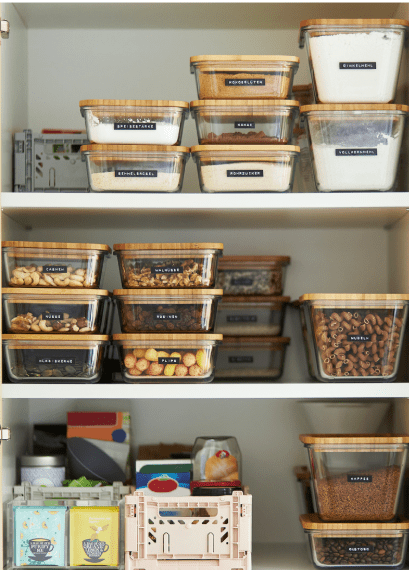
Choose one or two cabinets and a drawer for the dishes, cookware, and utensils you use most.
Leave everything else accessible, but try using only your selected items for a week.
Did you miss anything? Was cooking or cleaning easier?
Room Reset
Think Tiny House Nation, without going quite that extreme. (If you haven’t watched it, check it out. It’s one of my favorites!)
The idea is to see how your living space feels with a little less in it. You might be surprised by what you actually need to feel comfortable.
The living room is a great place to start.
For one week, try the following:
If moving furniture isn’t safe, simply cover or remove smaller items.
NOTE: If lifting or moving furniture isn’t safe, simply cover it and remove smaller items instead.
For one week:

Choose one room and temporarily put away some smaller decorative items.
Don’t move heavy furniture yourself. You can also throw a blanket over something to visually eliminate it from the room.
Imagine how the room might function with fewer pieces.
Does it feel more comfortable? Is it easier to move around?
What do you miss?
Remember: Nothing has to leave the house permanently during these experiments. You’re gathering information, not making final decisions.
Step 4: Invite Gentle Support
You don’t have to do this alone.
Sorting through a lifetime of belongings can bring up a lot of memories and emotions. Sometimes having a friend or family member with you makes the process easier and even enjoyable.
Choose someone you trust who understands that you’re looking for support, not someone to make decisions for you.
One friend, one task, one cup of coffee.
Be clear about what you need. Maybe it’s an extra set of hands. Maybe it’s someone to listen while you share stories. Or maybe you just want company while you sort through a closet.
You are the one making the decisions.
And if the process becomes too overwhelming, there are professionals who specialize in helping older adults organize, simplify, and prepare for a move.
Remember, you don’t have to figure everything out yourself.
How Can Involving Others Help?
- Friends and family can provide a welcome distraction, helping you work through memories without getting stuck or overwhelmed.
- A second set of hands can help you stay on track, sort belongings, and put things where they belong.
- Sharing memories out loud can be fun, comforting, and a wonderful way to pass along stories that might otherwise be forgotten.
- Most importantly, you’re reminded that you don’t have to do this alone (yes, you keep seeing this because it’s important).
And honestly, spending time with friends or family can make the whole process a little more enjoyable.
You Don’t Have to Figure It All Out Today
Some days, you’ll make great progress. Other days, you’ll open a box, find an old photograph, and spend an hour remembering.
That’s okay. This isn’t a race.
If you’re feeling overwhelmed or simply aren’t sure where to begin, I’m happy to help.
Through my real estate work, I’ve built relationships with organizers, senior move managers, movers, and other professionals who understand the unique challenges of downsizing later in life.
Sometimes, the most helpful first step is simply having someone walk through the house with you, listen to your concerns, and help you identify where to begin.
I’ve also created a printable worksheet to help you get started.
You can work through it on your own or with someone you trust.
Email me at HWitt606@gmail.com, and I’ll send you a copy or arrange to drop one off.
Coming Next: Preparing Your Home for Sale
In the final phase of this Senior Series, we’ll move from simplifying your belongings to preparing your property.
We’ll discuss what needs attention, which repairs may be worth considering, who can help, and how to approach selling without becoming overwhelmed.
For now, focus on one small step.
You don’t have to be ready to sell to start preparing for what’s next.
When that time comes, I would be honored to walk that path with you.
I’ve seen firsthand how difficult these decisions can be, especially for those who have spent a lifetime in one home. I’ve listened to the stories, heard the worries, and seen just how much a home can mean to someone.
I’ve also watched people I love navigate these decisions and wished this kind of support had been available to them sooner.
That’s why this matters to me. I understand that this is about so much more than selling a house. It’s about helping you navigate a major life transition with compassion, understanding, and the confidence that you’re still in control.






Leave a comment